
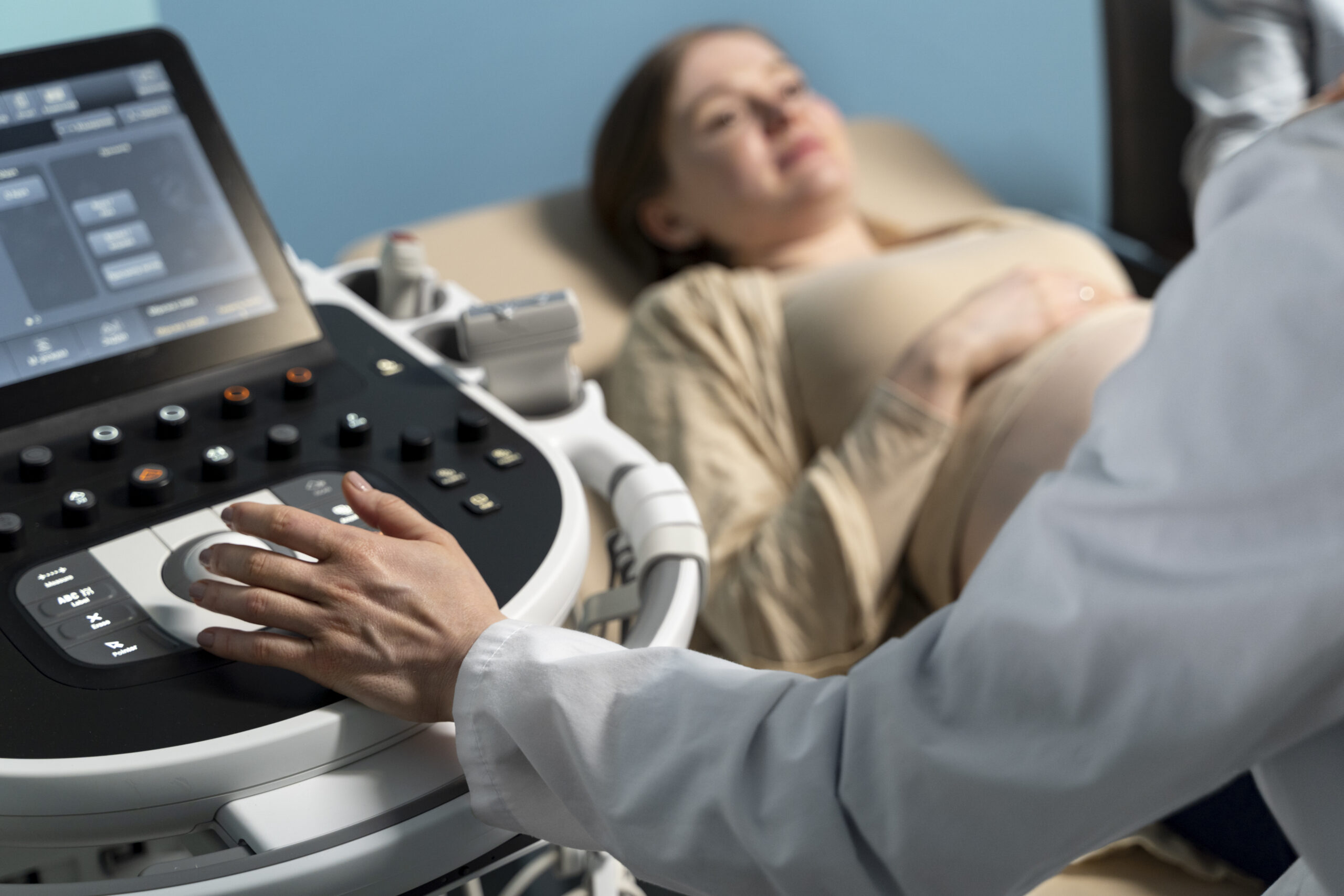
The 20-week anomaly scan, also known as the mid-pregnancy scan or anatomy scan, is one of the most important ultrasounds of your pregnancy. It provides a detailed look at your baby’s developing organs and structures, helping to identify any concerns early and guide ongoing care.
This scan is recommended for all pregnant women and forms a core part of routine prenatal assessment.
What Is the 20 Week Anomaly Scan?
The anomaly scan is performed at around 18–22 weeks of pregnancy.It is a detailed ultrasound examination that looks closely at how your baby is developing.
It is typically performed abdominally and usually lasts between 30–40 minutes.
What the 20 Week Scan Checks
The scan examines your baby from head to toe. It looks at:
- Brain and skull
- Spine
- Heart chambers and major blood vessels
- Kidneys and bladder
- Stomach and abdominal wall
- Diaphragm
- Face and profile
- Arms, legs, hands and feet
- Umbilical cord and cord insertion point
- Placental position
- Amniotic fluid levels
This scan is one of the most detailed assessments in pregnancy and can help detect many structural abnormalities.
Heart and Organ Assessment
A key part of the anomaly scan is examining the baby’s heart. The sonographer/consultant assesses:
- All four chambers
- Outflow tracts
- Great vessels
- Blood flow patterns (using Doppler when needed)
The scan also reviews:
- Kidneys and bladder function
- Stomach and bowel development
- Brain structures
- Limb development and movement
Placenta and Amniotic Fluid
The anomaly scan checks:
- Placental position (including placenta praevia)
- Amniotic fluid volume
- Umbilical cord structure
Placental position is important for planning delivery and identifying if follow-up scans are needed.
Can the 20 Week Scan Detect Abnormalities?
The anomaly scan can identify many structural differences, including:
- Certain heart conditions
- Limb and skeletal differences
- Abdominal wall differences
- Kidney or bladder abnormalities
- Some brain or spinal development differences
- Cleft lip
However, no scan can detect every condition.Some abnormalities only become visible later in pregnancy or after birth.
If something unexpected is seen, your clinician will discuss:
- What the finding may mean
- Whether follow-up scans are needed
- Whether fetal medicine assessment is recommended
What Happens During the Scan
Here is what to expect:
- Gel is applied to your abdomen
- The sonographer moves the probe to obtain detailed views
- Multiple measurements and images are taken
- You may need to change position to help improve visibility
- The scan is usually painless and safe
You may receive digital or printed images from your appointment.
Do I Need to Prepare?
You do not need to fast or have a full bladder for the 20-week scan. Wear comfortable clothing that allows access to your abdomen.
When Follow-Up Scans Are Recommended
Further scans may be offered if:
- The placenta is low-lying
- The baby’s position made some structures difficult to see
- A variation in development is identified
- You are carrying twins or multiples
- There are maternal health concerns
Your obstetrician will explain the findings and next steps clearly. At Central Health, we can also offer a cervical length scan together with the anomaly scan to screen for preterm birth.
To learn more about pregnancy scans or to discuss our maternity services, you can book a consultation with us directly or make a general enquiry to begin your journey with us.
Article written by Dr Panicos Shangaris (Consultant Obstetrician)
FAQs – 20 Week Anomaly Scan
What is the 20 week anomaly scan?
It is a detailed mid-pregnancy ultrasound that checks your baby’s organs and structures,
including the brain, heart, spine, kidneys and limbs.
What does the 20 week scan look for?
It looks for structural abnormalities, reviews growth and development, checks placental position and assesses amniotic fluid levels.
How long does the anomaly scan take?
Most scans take between 30 and 40 minutes, depending on the baby’s position and clarity of the images.
Can the anomaly scan detect Down syndrome?
The 20-week scan may identify physical markers, but it is not a diagnostic scan for chromosomal conditions. NIPT or diagnostic testing is used for that purpose.
Is the 20 week scan painful?
No. It is a safe, non-invasive and painless ultrasound.
Can I find out the sex of the baby at the 20 week scan?
Yes, in most cases. Your sonographer will tell you if you wish to know.