
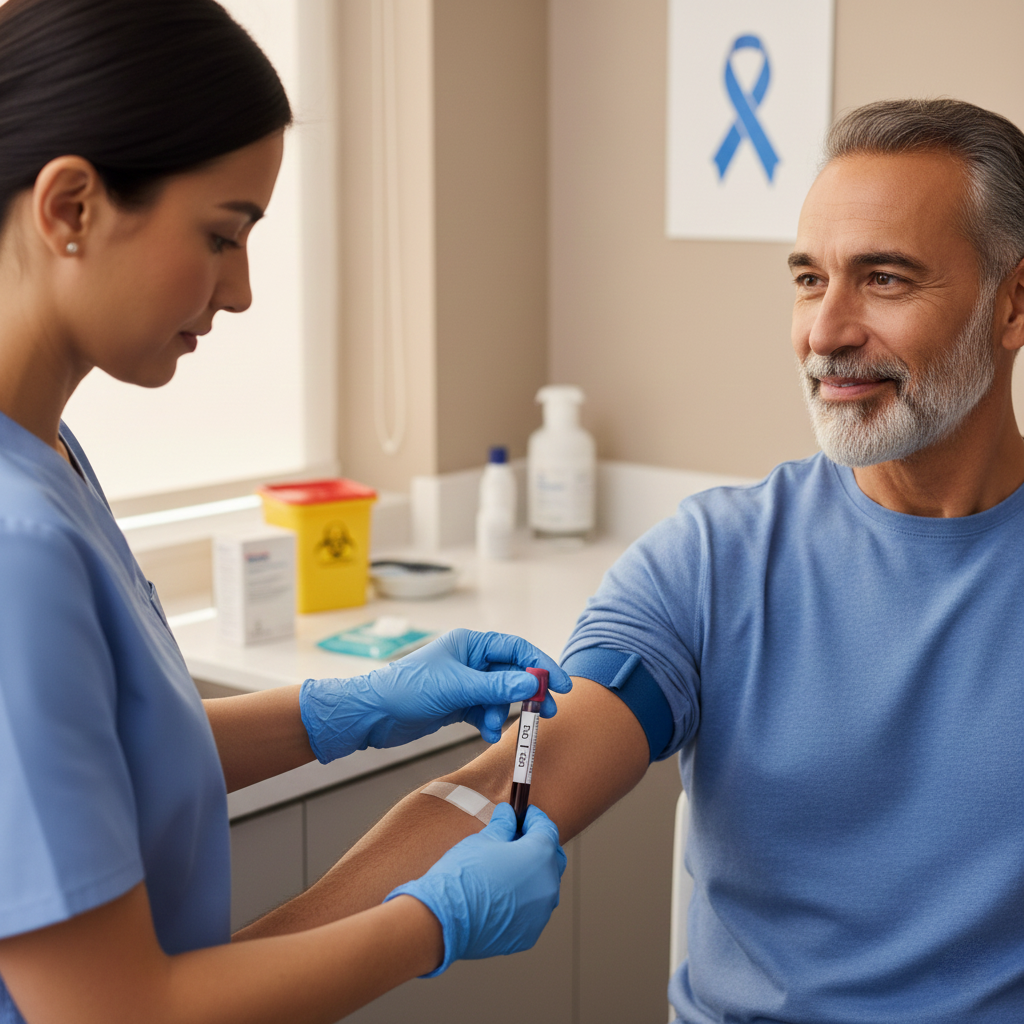
Prostate cancer is the most common cancer in men in the UK, yet unlike breast or cervical cancer, there is no national screening programme. This leads many men to wonder whether they should request a PSA test themselves.
Understanding what PSA is, why it can be helpful, and its limitations can help you make an informed decision about prostate cancer screening.
What Is PSA?
PSA stands for prostate-specific antigen, a protein produced by the prostate gland. A PSA blood test does not diagnose prostate cancer. Instead, it detects activity in the prostate.
PSA can be raised for many reasons, including:
- Benign prostatic hyperplasia (BPH)
- Prostatitis
- Recent ejaculation
- Cycling
- Urinary infection
- Recent sexual activity
Importantly: PSA can be normal even when prostate cancer is present, which is one of the reasons screening is complex.
Should You Get a PSA Test?
A PSA test may be helpful particularly if:
- You are over 50
- You are 45+ with Black African or Caribbean heritage
- You are 40+ with a strong family history of prostate or breast cancer
- You have symptoms suggestive of prostate cancer
- You prefer proactive screening based on your personal risk
Why Isn’t There a National Screening Programme?
Unlike the NHS screening programmes for breast, bowel, or cervical cancer, PSA screening is not offered nationally because:
1. It’s Not a Perfect Test
PSA levels can be raised for reasons other than cancer (false positives), and can also be normal in men who do have cancer (false negatives).
2. Risk of Overdiagnosis
Many prostate cancers grow so slowly that they would never cause illness or shorten life. Detecting these can lead to unnecessary anxiety, tests, or even treatment.
3. Potential Harms of Investigation and Treatment
A raised PSA can lead to:
- MRI
- Biopsy (with risks including infection and sepsis)
- Potential treatment (such as prostatectomy or radiotherapy)Each carries possible side effects, including urinary incontinence and erectile dysfunction.
4. Variation in Cancer Behaviour
Some prostate cancers are slow-growing while others are aggressive. PSA alone cannot reliably distinguish between them.
How PSA Screening Has Improved
Although PSA isn’t perfect, advances in diagnostic pathways mean PSA testing is now safer and more accurate than ever.
MRI-First Pathway
If PSA is raised, most men now have an MRI scan first, before any biopsy.Benefits include:
- Fewer unnecessary biopsies
- Much lower rates of infection and sepsis
- More accurate detection of clinically significant cancers
Stockholm-3 Test
Where MRI findings are unclear, a Stockholm-3 (S3) test can be used to refine cancer risk using multiple blood markers. This helps avoid unnecessary biopsies.
Making an Informed Decision About PSA Testing
Screening with PSA is a personal choice. The benefits include earlier detection, but the limitations include false positives and the possibility of overtreatment.
A GP experienced in men’s health can help guide the decision based on your age, ethnicity, family history, and preferences.
PSA Testing – FAQs
1. Is PSA a reliable test for prostate cancer?
PSA is useful but not perfect. It can be raised for many non-cancer reasons, and it may be normal even in men with prostate cancer.
2. Why does the UK not have a national prostate cancer screening programme?
Because PSA can lead to false positives, false negatives, and overdiagnosis. Screening decisions are therefore individualised.
3. When should I consider a PSA test?
Men over 50, men over 45 with Black heritage, or men over 40 with a strong family history may benefit from discussing PSA testing with a GP.
4. What happens if my PSA is raised?
Your doctor will usually repeat the test under optimal conditions. If still raised, an MRI scan is the next step, followed by additional tests or biopsy only if needed.
5. Can lifestyle affect PSA levels?
Yes. Ejaculation, cycling, infection, and prostatitis can temporarily raise PSA levels.